
Executive Coaching Strategies for High-Stakes Corporate Environments
Executive coaching in a pharmaceutical or life sciences organization is not the same as executive coaching in a general corporate context. The stakes are different. The pace is different. The regulatory environment creates a layer of accountability that does not exist in most industries, and the consequences of leadership gaps can extend beyond business performance to patient safety, regulatory standing, and organizational reputation.
At Readiness Consulting Group, our executive coaching work emerges directly from the operational environments we support. We work alongside leaders who are preparing teams for FDA inspections, navigating commercial launches, managing high-profile program challenges, and driving transformation under conditions of sustained uncertainty. The coaching strategies that work in these environments share a set of common principles.
Lead Through Uncertainty Without Amplifying It
Leaders in regulated industries are often asked to make decisions with incomplete information under significant time pressure. The tendency under these conditions is to either communicate false certainty or to withhold communication altogether, both of which erode team trust. Effective leaders in high-stakes environments develop the skill of acknowledging uncertainty clearly while communicating a decisive direction. They give their teams enough orientation to act without waiting for conditions that may never arrive.
Build Accountability Without Command and Control
Regulatory compliance organizations operate under rule-based systems, and it can be tempting to manage them through directive leadership. Experience shows that directive leadership produces compliance without engagement. Teams that are directed execute tasks. Teams that are led understand why those tasks matter. In an environment where a documentation lapse or a process deviation can trigger a significant regulatory event, you need teams that are engaged, not just compliant. Coaching leaders to establish accountability frameworks that include purpose, not just metrics, is one of the highest-impact interventions available.
Manage Stakeholder Dynamics Across Functions
High-stakes pharmaceutical programs almost always involve cross-functional leadership challenges. Manufacturing, quality, regulatory, supply chain, and commercial leadership are rarely aligned by default. The leaders who drive the most successful programs are skilled at identifying where misalignment exists, convening the right conversations, and building the shared accountability that sustained cross-functional performance requires. Coaching that helps leaders diagnose and navigate stakeholder dynamics is directly applicable in almost every engagement we support.
Sustain Performance Under Prolonged Pressure
A product launch, a consent decree response, a site remediation, or a major regulatory submission can sustain organizational pressure for months or years. Leaders who burn through their own energy and the capacity of their teams in the first quarter of a long-horizon challenge become liabilities rather than assets. Coaching executives to pace themselves, to delegate more effectively, and to build renewal into the cadence of a sustained program is practical preparation for the realities of life sciences leadership.
Executive coaching that is anchored in the operational realities of the environment produces more durable results than coaching delivered in the abstract. When leaders can connect their development work directly to the challenges they are navigating today, the growth tends to be faster and more stable.
To learn about executive coaching and program leadership support through Readiness Consulting Group, visit our Executive Coaching service page.
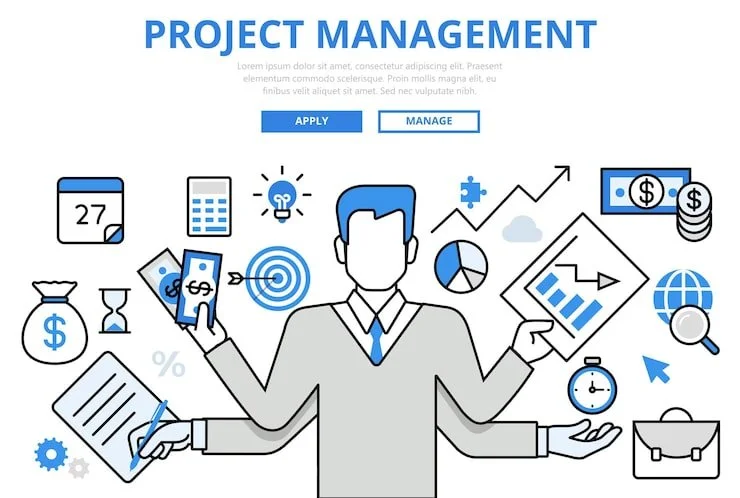
Case in Point: Pharma Launch Readiness
Consider a pharmaceutical company preparing for a new product launch. The project involves multiple activities — validation of manufacturing lines, submission of final dossiers to regulatory agencies, training of sales teams, and logistics planning for distribution.
Without structured project management, these parallel activities could easily become disjointed, leading to submission delays or audit findings. With a dedicated project manager, however, the organization gains:
A single point of accountability
Aligned timelines across all functions
Real-time visibility of compliance tasks
Early identification of potential risks
A well-documented trail for regulatory review
This disciplined approach not only ensures compliance but also accelerates time-to-market — a critical advantage in competitive pharmaceutical markets.
Technology and Data in Modern Pharma Project Management
Digital transformation is reshaping how project management supports compliance. Advanced tools such as electronic document management systems (EDMS), GxP-compliant project software, and data analytics platforms help teams maintain accuracy and transparency throughout the project lifecycle.
Automation minimizes manual errors, while dashboards provide real-time insights into progress and compliance status. By integrating technology with project management frameworks, organizations can track deviations, monitor corrective actions, and ensure full alignment with regulatory expectations.
The Human Factor: Building a Culture of Compliance
Beyond systems and processes, regulatory success depends on people. Effective project management nurtures a compliance-focused culture by emphasizing accountability, training, and communication. Teams understand not just what needs to be done, but why compliance matters to patient safety and organizational integrity.
Regular training sessions, milestone reviews, and performance feedback loops create a shared sense of ownership — transforming compliance from a checklist activity into a core business value.
How Readiness Consulting Group Supports Compliance-Driven Projects
At Readiness Consulting Group, we specialize in guiding pharmaceutical and life sciences organizations through the complexities of project and program management. Our experts bring deep industry experience to help clients:
Implement project frameworks aligned with FDA and EMA standards
Manage documentation and change control effectively
Conduct readiness assessments for product launches
Build cross-functional governance structures
Enhance team collaboration through proven methodologies
Our approach focuses on operational readiness, ensuring that compliance, efficiency, and quality move hand-in-hand toward successful project delivery.
Conclusion
Regulatory compliance is one of the greatest challenges in pharmaceutical operations — but it is also one of the greatest opportunities to build trust, credibility, and long-term success. By integrating effective project management practices, organizations can move beyond reactive compliance and adopt a proactive, strategic approach to meeting regulatory expectations.
With structured planning, risk management, collaboration, and documentation discipline, project management becomes the engine that drives both compliance and innovation.
At Readiness Consulting Group, we help organizations achieve that balance — turning complex regulatory demands into organized, measurable, and sustainable success.
